
Hail, Caesar!

Film buffs familiar with Hollywood cinema in the 1950s will provide the ideal audience for this divertissement by the Coen brothers.
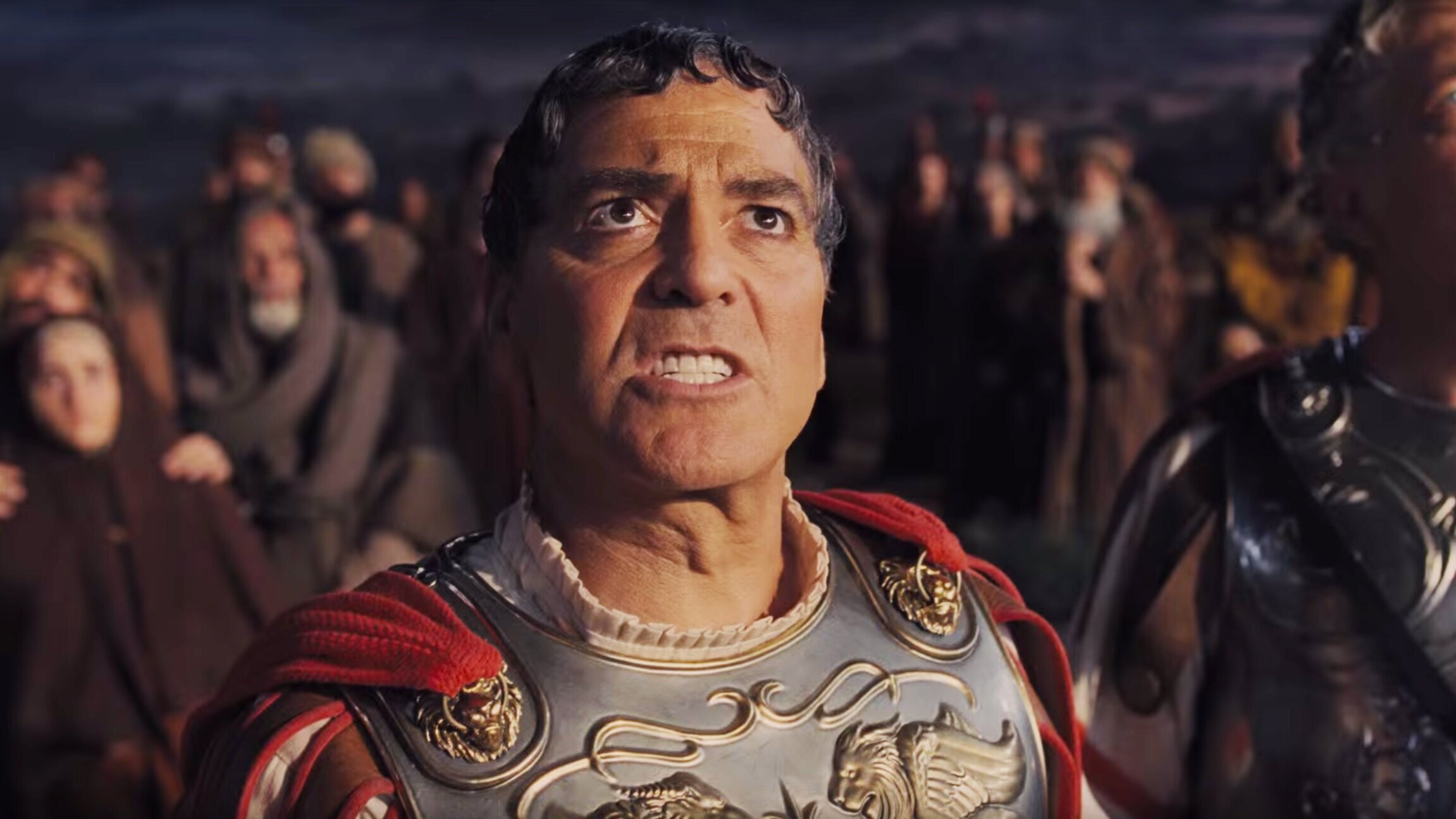
The film within the film: George Clooney as Baird Whitlock as a Roman centurion
If Robert Altman’s The Player (1992) took a jaundiced view of Hollywood, this new piece is no less immersed in what goes on in the studios but plays it wholeheartedly for laughs. It is a film of good comic moments many of which stem from its parodies of the kind of movies that were being made in the period in which it is set, the 1950s. If religious epics featuring the Christ (seen naturally from the back to avoid any offence by showing the face of the Saviour) are a prime target, parody yields to more affectionate pastiche when we are shown a big number, No Dames, being staged for a musical film with the actors dressed as sailors in a way that would later have been the envy of Jacques Demy.
But the humour extends to the Hollywood scene generally and thus to rival gossip columnists, two sisters both played by Tilda Swinton, who stand in for the likes of Hedda Hopper. Swinton seizes her chances, but many in the distinguished cast are offered only crumbs (among them Channing Tatum, Frances McDormand, Jonah Hill and Scarlett Johansson, even if the latter is seen filming a Busby Berkeley styled scene to remind us of Esther Williams). Meanwhile, Ralph Fiennes has slightly more opportunities as a director distraught at having to handle a popular western star (Alden Ehrenreich) promoted by the bosses to a different kind of film but with zero ability out of the saddle.
At the centre we find Josh Brolin as the studio fixer whose tasks include the need to conceal from the press the fact that the star of Hail, Caesar!, Baird Whitlock (George Clooney channelling Victor Mature), has mysteriously disappeared. Actually he’s been kidnapped and his captors in a strange rejigging of the McCarthy era become Communists who are less victims than conspirators. That they are also screenwriters whose ransom demand will be a payback for inadequate fees received is a neat idea, but much of this becomes silly. Clooney himself is largely given poor material and a sub-plot about the fixer being poached for a better paid post in aviation fails either to amuse or to carry weight. Indeed the film lacks any true backbone and in consequence engaging moments (such as the confessional scene which opens the film) are all that it has to offer, even if it is photographed as immaculately as ever by Roger Deakins. But its rather specialised appeal will certainly suit movie buffs since references abound. Many I doubtless missed, but not a couple of scenes echoing the look of a Hitchcock movie and the naming of one of the characters chosen to give a nod to Vertigo.
MANSEL STIMPSON
Cast: Josh Brolin, George Clooney, Alden Ehrenreich, Ralph Fiennes, Jonah Hill, Scarlett Johansson, Frances McDormand, Tilda Swinton, Channing Tatum, Christopher Lambert, Veronica Osorio, Alison Pill, Jack Huston, Agyness Deyn, Clancy Brown, Wayne Knight, John Bluthal.
Dir, Screenplay and (as Roderick Jaynes) Ed Ethan and Joel Coen, Pro Tim Beavan, Ethan Coen, Joel Coen, Eric Fellner and Catherine Farrell, Ph Sir Roger Deakins, Pro Des Jess Gonchor, Music Carter Burwell, Costumes Mary Zophres.
Mike Zoss Productions/Working Title Films-Universal Pictures.
106 mins. UK/USA. 2016. Rel: 4 March 2016. Cert. 12A.